1

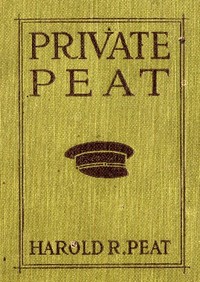
Private Peat — Themes and Context
(0 User reviews)
102
Project Gutenberg
2005
Not confirmed
World War, 1914-1918 -- Campaigns -- Western Front; World War, 1914-1918 -- Personal narratives, Canadian
Readers of public-domain and historical texts
Project Gutenberg digital edition
en
Edition facts
Words
48,430
Reading time
211 min
Text sections
6
For Private Peat — Themes and Context, the stored edition analysis reports 48,430 words, 3 hr 31 min estimated reading time, and 6 detected text sections.
The text analysis averages about 15.7 words per sentence, while the detected sections provide another way to judge how the source is divided.
Project Gutenberg metadata also associates the work with “World War, 1914-1918 -- Campaigns -- Western Front,” connecting these edition facts with the source record’s subject description.
Source:
Project Gutenberg record #16685
Harold R. Peat's 1917 memoir of service as a private in the First Canadian Contingent, focusing on the camaraderie, humor, and grim realities of the Western Front, with particular attention to the author's narrative voice and use of dialect.
Read the complete public-domain text at its original source.
Read on Project GutenbergHarold R. Peat opens his war memoir with a deliberate conversational tone, recounting a pub debate that spurs his enlistment. The line 'That got me' signals a personal turning point, while the banter among friends—'Well,' said old Bill, 'I know what war is'—establishes a voice that is colloquial and immediate. Peat's foreword states he 'set out to write a book of smiles,' yet acknowledges that 'the seriousness of it all came back to me and crept into my pages.' This tension between humor and gravity shapes the narrative, as seen in his depiction of Ypres: a city of 'beauty of architecture and form' that is also a 'hot' spot where 'you can't last any longer than a snow ball in Ypres.'
The Author's Colloquial Voice and Direct Address
Peat writes in a style that mimics spoken storytelling, using contractions, interjections, and direct address to the reader. In the opening chapter, he presents dialogue without attribution tags, letting the exchange between 'old Bill' and Ken Mitchell carry the scene. His foreword addresses 'those in the United States who are sending their husbands, their sons and brothers,' framing the book as both personal record and public comfort. The phrase 'I give it to the public now, hoping that something new will be found in it' reveals his awareness of competing narratives. This directness extends to his use of nicknames—'salmon-belly' for a British Columbia man, 'blue-nose' for a Nova Scotian—which he employs to evoke regimental camaraderie. The voice is not polished but purposeful, aiming to convey authenticity over literary refinement.
Dialect and Regimental Banter as Characterization
Peat peppers his prose with soldier slang and regional epithets, using them to build a sense of unit identity. In the excerpt, Major John calls out 'Hello! salmon-belly!' and 'Hello! fish-eater—hello, blue-nose!' These terms are not explained; they assume reader familiarity with Canadian regional stereotypes. The effect is to create an insider's perspective, where shared language reinforces belonging. Similarly, Tommy Atkins' nickname for Ypres—'Wipers'—is presented without gloss, and the curse 'Oh, go to ——; you can't last any longer than a snow ball in Ypres!' blends humor with fatalism. Peat also includes a Belgian civilian who speaks 'perfect English' and explains his American work history, a detail that underscores the international composition of the Western Front. The dialogue is sparse but pointed, revealing character through idiom rather than description.
Descriptive Contrasts: Beauty Amid Devastation
Peat's description of Ypres juxtaposes architectural grandeur with the reality of war. He calls the Cloth Hall 'a city of delight, a city that charmed and awed by its impressive grandeur,' then notes that 'the city was massed with refugees' and that 'not a day passed that two or three women, or half a dozen children or babies did not pay the toll.' The shift from aesthetic appreciation to human cost is abrupt, mirroring the soldier's experience of moving through a landscape that is both beautiful and lethal. He specifies that Ypres was 'not yet destroyed' at the time, adding a layer of tragic irony for readers who know its later fate. The detail that 'every house, every estaminet, every barn, every stable was filled' with refugees emphasizes overcrowding and desperation, while the phrase 'cloven hoof of the advancing Hun' introduces a moral judgment that colors the descriptive passages.
Narrative Structure and the Use of Anecdote
The excerpts reveal a memoir built from discrete episodes rather than continuous chronology. Chapter titles like 'The Call—To Arms' and 'Vive la France et al Belge!' signal thematic blocks, and within them Peat moves from general observation to specific encounter. The Ypres chapter begins with a broad description of the city, then narrows to a walk 'a few miles' to Vlamentinge, where he meets a Belgian civilian. This anecdote—the man's lost sweetheart, his inheritance, the 'twinkle in his eye'—is left unfinished in the excerpt, suggesting that Peat values the vignette's texture over its resolution. The foreword admits the book is 'unsatisfactory' to the author, yet insists it 'holds my honest and long considered opinions.' This self-awareness about the limits of memory and narrative control is a recurring undercurrent, as Peat balances the desire to entertain with the need to bear witness.
Readers approaching Private Peat should attend to the way Peat uses voice to mediate between the horrors of war and the demands of popular memoir. His decision to foreground banter and regional slang is not mere color but a deliberate strategy to humanize the soldier's experience. The book's episodic structure rewards attention to small scenes—a conversation in a pub, a walk through a ruined city—that carry more weight than their brevity suggests. Peat's narrative is best read as a crafted performance of authenticity, one that invites scrutiny of how soldiers told their own stories in the midst of unprecedented violence.
Rain dripped down the window as I closed Private Peat, his dialect still echoing in my head—that odd blend of grit and cheer. Later, thumbing the shelf for something utterly different, I landed on The Crisis of the Naval War — Inside the Classic. Strange, how that book’s quiet, strategic patience felt like the same watchful silence between Peat’s jokes. One war, two very different voices.
There are no reviews for this eBook.
There are no comments for this eBook.
Reader reflection
How did this book work for you?
Your answers remain private and are stored only in this browser.
Your progress
0
/
10
2
What was your overall reaction to the book?
3
Would you recommend this book to another reader?
4
How easy was the book to follow?
5
Would you start a conversation about this book?
6
How would you describe its reading pace?
7
What was the strongest part of the book?
8
How would you rate its originality?
9
Which lesson or insight stayed with you?
10