1

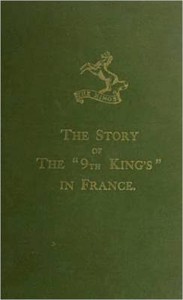
The Story of the "9th King's" in France — Context and Discussion
(0 User reviews)
2234
Project Gutenberg
2005
Not confirmed
World War, 1914-1918 -- Regimental histories -- Great Britain; Great Britain. Army. King's Liverpool Regiment. Battalion, 9th
Readers of public-domain and historical texts
Project Gutenberg digital edition
en
Edition facts
Words
39,132
Reading time
171 min
Text sections
5
The source record for The Story of the "9th King's" in France — Context and Discussion measures this digital text at 39,132 words, 2 hr 51 min estimated reading time, and 5 detected text sections.
The text analysis averages about 19.4 words per sentence, while the detected sections provide another way to judge how the source is divided.
Project Gutenberg metadata also associates the work with “World War, 1914-1918 -- Regimental histories -- Great Britain,” connecting these edition facts with the source record’s subject description.
Source:
Project Gutenberg record #16974
Roberts's regimental history traces the 9th King's Liverpool Regiment from its 1859 volunteer origins through training and into the Third Battle of Ypres, using precise details like rehearsals on taped cornfields and the pre-zero gas-shell barrage.
Read the complete public-domain text at its original source.
Read on Project GutenbergThe opening chapter of Roberts's history does not begin with the Great War but with the 1859 Volunteer Movement in Liverpool, tracing the battalion's lineage through renumberings and moves from Rose Hill Police Station to Soho Street and Everton Road. This grounding in pre-war organisation establishes that the 9th King's was a Territorial Force unit, not a Kitchener New Army battalion, a distinction that shapes its later experiences.
By the time the narrative reaches France, the reader has seen how decades of part-time training and South African War service created a framework that, in 1915, allowed the Territorials to reinforce the Regular Army. The early chapters thus frame the battalion's battlefield actions as the culmination of a long institutional evolution.
From Cornfield Rehearsals to Zero Hour
The excerpts show that Roberts devotes considerable space to the meticulous preparation before the Third Battle of Ypres. At Moringhem, the battalion rehearsed its attack on cornfields where the British and enemy trenches were taped out, and a model of the sector—including Uhlan Farm, Jasper and Plum Farms, Pommern Castle, and Pommern Redoubt—was constructed. Tanks were represented by half-limbers, the shrapnel barrage by drums. This attention to training detail gives the reader a concrete sense of how the battalion prepared for a specific, named objective.
Roberts also records the psychological dimension: the men knew their own role but not the overall plan, and wild rumours circulated—most notably that eighty mines would be sprung at zero. The author notes that this rumour was inspiring to all, a rare glimpse into morale. The waiting in Oxford Trench, under shellfire, is described with understated tension: the trench was shallow and wide, and several were wounded before the fight began.
The Sound of the Barrage
Roberts's account of zero hour on 31 July 1917 is striking for its sensory detail. Two hours before zero, gas shells were fired on enemy batteries, and the drone of those shells passing overhead was very reassuring to the waiting troops. Then, a few seconds before 3:50 a.m., an 18-pounder battery fired early. The author writes: There followed a deafening roar. All the guns had fired together, and their shells were racing across the sky. A sheet of flame covered the enemy trenches.
This passage is the most vivid in the excerpts, conveying the sudden, overwhelming noise and light that marked the start of the assault. Roberts does not linger on the aftermath in the provided text, but the precision of the timing—the early battery, the simultaneous roar—suggests a historian who values accurate chronology and the lived experience of the men who rose from the trench.
The Battalion's Objective and Its Distance
Roberts specifies that the 9th King's objective was a section of the enemy second line called the Stutzpunkt Line, from Pommern Redoubt (known to the Germans as Gartenhof) to Bank Farm (Blucher). The distance from the zero position was approximately a mile and a half, which Roberts notes was at that period of the war a big distance to be called upon to cover in one day. This remark is one of the few explicit tactical judgments in the excerpts, indicating that the author expected his readers to understand the significance of such an advance in the context of 1917 trench warfare.
The naming of farms and redoubts—Uhlan, Jasper, Plum, Pommern—gives the narrative a local geography that a reader can follow on a map. Roberts's inclusion of both British and German names for the same positions (Pommern Redoubt / Gartenhof) reflects a historian's attention to the enemy's perspective, even if only in nomenclature.
The Pre-War Foundation
The first chapter establishes that the battalion originated as the 80th Lancashire Rifle Volunteers in 1861, formed by members of the newspaper and printing trades in Liverpool. The early parades at Rose Hill Police Station and the Corn Exchange, and later headquarters at 16 Soho Street and 59 Everton Road, are recorded with the specificity of a unit history. Roberts credits the early volunteers with creating a trained battalion that, in 1915, was ready to reinforce the Regular Army, buying time for Kitchener's New Armies to complete their training.
This framing is important for a first reading: it explains why the 9th King's, as a Territorial battalion, had a different trajectory from the service battalions raised later. The South African War company, the annual camps, and the renumberings all contribute to a portrait of a unit that was, by 1914, already a functioning military organisation with a local identity rooted in Liverpool's commercial and industrial life.
Roberts's history is best read as a chronicle of preparation and execution, not a strategic analysis. The excerpts reveal a writer who values concrete detail—taped cornfields, synchronised watches, the drone of gas shells—over grand narrative. A first-time reader should pay attention to the names of farms and redoubts, as they form the geography of the battalion's war. The pre-war chapters, though seemingly remote, explain why the 9th King's fought as it did in 1917.
Those rehearsals on taped cornfields stayed with me, the strange precision before the mud. Reading about the regiment’s quiet preparation, I keep thinking of that other voice from 1914, the one that saw the war coming and flinched. There’s a somber thread between them. I’ve returned to The Crime Against Europe: A Possible Outcome of the War of 1914 — Edition Insights more than once, hoping the hindsight would soften, but it never quite does.
There are no reviews for this eBook.
There are no comments for this eBook.
Reader reflection
How will you remember this book?
Save your reaction, strongest insight, and memorable passage.
Your progress
0
/
10
2
What was your overall reaction to the book?
3
Would you recommend this book to another reader?
4
How easy was the book to follow?
5
How well did it match your expectations?
6
Could you see yourself revisiting this book?
7
How strong was your personal connection to the text?
8
How would you describe its reading pace?
9
What is the main idea you are taking away?
10