1

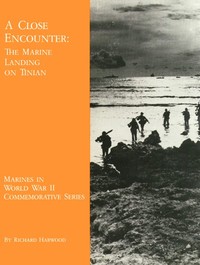
A Close Encounter: The Marine Landing on Tinian — Edition Insights
(0 User reviews)
399
Project Gutenberg
2015
Not confirmed
United States. Marine Corps -- History -- World War, 1939-1945; World War, 1939-1945 -- Campaigns -- Northern Mariana Islands -- Tinian; Tinian (Northern Mariana Islands) -- History, Military
Readers of public-domain and historical texts
Project Gutenberg digital edition
en
Edition facts
Words
20,787
Reading time
91 min
Text sections
22
This digital edition of A Close Encounter: The Marine Landing on Tinian — Edition Insights is described by source-level measurements including 20,787 words, 1 hr 31 min estimated reading time, and 22 detected text sections.
The text analysis averages about 18.7 words per sentence, while the detected sections provide another way to judge how the source is divided.
Project Gutenberg metadata also associates the work with “United States. Marine Corps -- History -- World War, 1939-1945,” connecting these edition facts with the source record’s subject description.
Source:
Project Gutenberg record #48969
Richard Harwood's account of the Tinian landing examines the strategic debate over beach selection, the seven-week bombardment, and the Marines' unopposed assault on narrow White Beaches, drawing on planning documents, oral histories, and Japanese diary entries.
Read the complete public-domain text at its original source.
Read on Project GutenbergThree weeks into the battle for Saipan, commanders were already turning their attention to Tinian, visible three miles off the southwest coast. The crucial question was where to land: Vice Admiral Richmond K. Turner favored Yellow Beach near the fortified Tinian Town, while Marine planners argued for two narrow sand strips on the northwest coast—White 1, only 60 yards wide, and White 2 at 160 yards. This account by Richard Harwood, part of the Marines in World War II Commemorative Series, traces the decision-making, the preparatory bombardment, and the execution of the assault, drawing on official records, oral histories, and Japanese diary entries.
The Beach Selection Debate
The choice of landing site was not merely tactical but shaped by conflicting assessments of risk. Turner's skepticism about the narrow White Beaches reflected a commander's caution against funneling troops into a constricted zone. Yet the Amphibious Reconnaissance Battalion, led by Captain James L. Jones, conducted covert surveys that ultimately supported the Marine plan. Harwood presents the debate without resolving it as a simple triumph of one view, instead showing how the decision emerged from a series of operational constraints and intelligence reports. The text notes that the beaches were code-named White 1 and White 2, and that the final choice hinged on the reconnaissance findings and the need to avoid Tinian Town's heavy fortifications.
The Cumulative Bombardment
The preparatory fires against Tinian were extraordinary in scale and duration. Beginning with carrier strikes on 11 June, the campaign escalated through naval gunfire, Army P-47 air strikes, and massed artillery from Saipan's southern shore. By mid-July, 13 artillery battalions were engaged, firing 160 guns around the clock. Harwood includes a telling detail: the XXIV Corps Artillery alone conducted 1,509 fire missions, expending 24,536 rounds. Yet the text also acknowledges the limits of this bombardment—analysts later described the battleship fires on 13 June as 'ineffective' and 'misdirected' against concealed gun positions. The cumulative effect, however, was psychological as well as physical, as Japanese diaries record: 'Now begins our cave life.'
Voices from the Garrison
Harwood weaves Japanese perspectives into the narrative through diary excerpts that reveal the garrison's deteriorating condition. One soldier wrote of the 'unparalleledly inaccurate antiaircraft fire' and noted that 'the Naval Air Group has taken to its heels.' Another diarist complained that naval aviators 'stole Army provisions' when they fled to the mountains. These voices are not merely color; they underscore the isolation and disintegration of the defenders. The text also cites Brigadier General Frederick Karch's memory of a Japanese machine-gun crew caught by artillery, 'laid out just like a school solution.' Such details ground the strategic account in human experience, though Harwood does not claim to represent the full range of Japanese responses.
Readers should note that this commemorative volume is concise—just over 20,000 words—and focuses narrowly on the landing phase. It does not provide a comprehensive history of the Tinian campaign or the broader Pacific war. The inclusion of sidebars on napalm, Medal of Honor recipients, and the selection of White Beach offers supplementary detail, but the core narrative remains tightly bound to the planning and execution of the amphibious assault. For those seeking a fuller picture, the sources listed at the end point to official Marine Corps histories and oral history collections.
Some summers I think of those Marines stepping onto White Beaches, the orders that shaped their quiet landing, and the men below who simply trudged. I am reminded of a weathered companion, grumbling about the distance between plans and the mud, Red-Tape and Pigeon-Hole Generals As Seen From the Ranks During a Campaign in the Army of the Potomac — Reading Companion. Both whisper, across their years, about waiting and walking.
There are no reviews for this eBook.
There are no comments for this eBook.
Reader reflection
Record your reading impressions
A brief reflection can help important ideas stay with you longer.
Your progress
0
/
10
2
How much did you enjoy the reading experience?
3
Would you recommend this book to another reader?
4
How easy was the book to follow?
5
Did any part of the book stay with you emotionally?
6
Would this book work well in a reading group?
7
What did you think about the pace?
8
Which element worked best for you?
9
In one sentence, what did you learn?
10